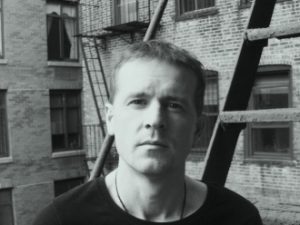
Artists Without Walls’ member Liam O’Connell recently took a trip to Florida to support a friend. His friend, who attends the University of Florida in Gainseville and is confined to a wheelchair, has been made to sit in the “people with disabilities” section for football games while he would prefer sitting with the student body. Liam made this video in support of his friend. Take a look; this is terrific. Nice job, L-1 Crackeriffic.
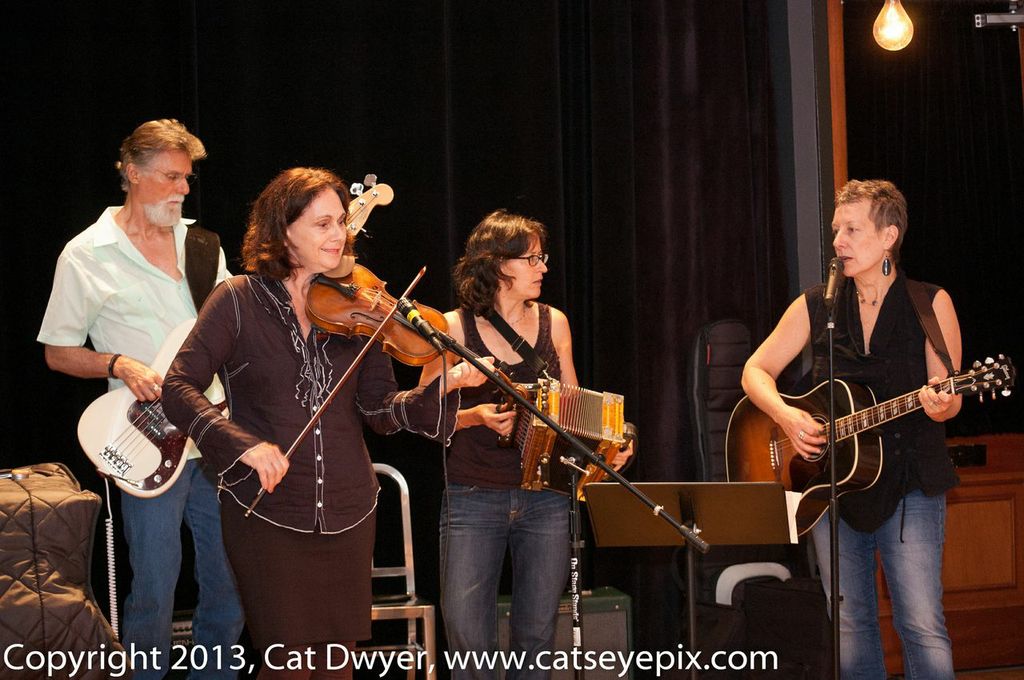
Come on out to the “AWoW Showcase at The Cell” for a taste of “Northern Fried” Cajun music of Southwest Louisiana: Upbeat, danceable roots music, spirited two-steps and beautifully heartwarming, bittersweet waltzes. The Catahoula Cajun Band is a New York based group and while all the band members hail from north of the Mason-Dixon line, their love of toe-tappin’ dance and traditional music inspired them to tackle the two-steps, waltzes, and Cajun-French lyrics of Acadiana.
Here’s the rest of the evening’s line-up:
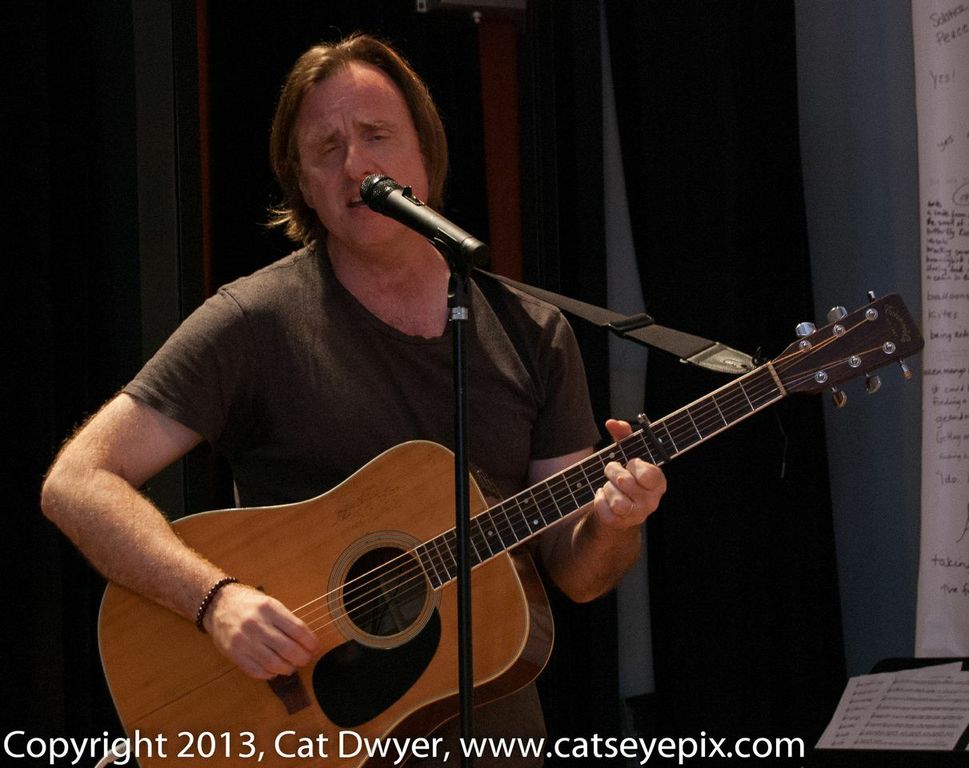
Matt Keating
Timeout London said of singer/songwriter Matt Keating “Beautiful and honest songs of substance and melancholy.”Matt’s newest album, Wrong Way Home, a 16 song emotional piece, is his tenth release. Matt’s music is tinged by nostalgia while being entirely modern. It is contemplation on life’s narrative, offering moments of joy and melancholy, epiphany and regret.
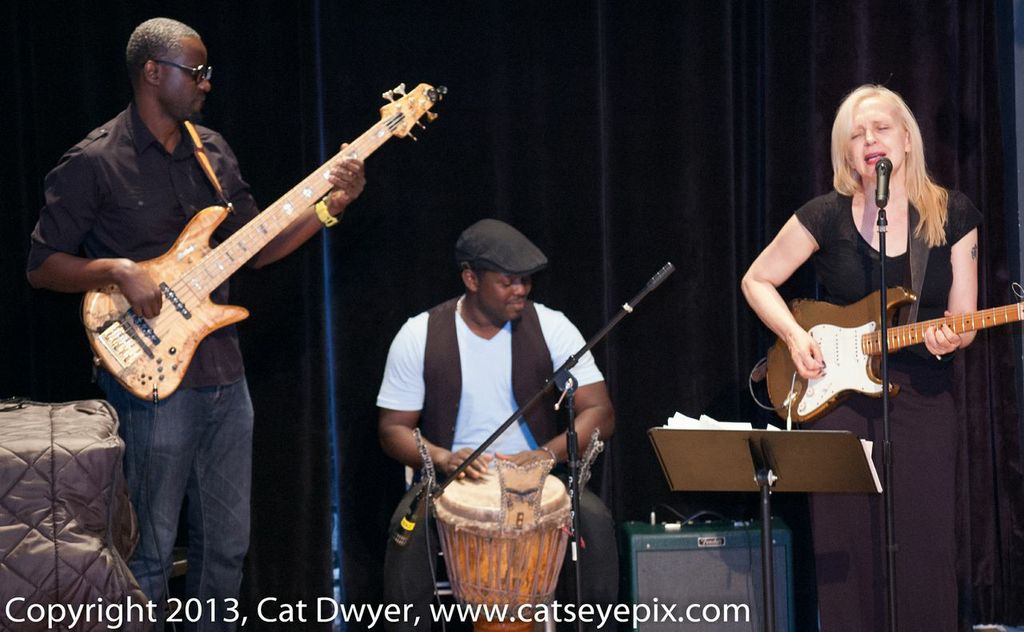
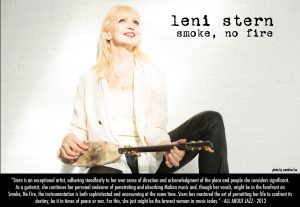
Leni Stern
Leni Stern, who was born in Munich, Germany, and educated at Boston’s Berklee College of Music, is a New York based guitarist whose recent recordings are lush, deeply felt explorations of the sound of Africa colored by Stern’s soulful lyrics, lightly sanded voice and dazzling instrumental prowess. Leni will be joined by one of her fine musicians, bassist Mamadou Ba.
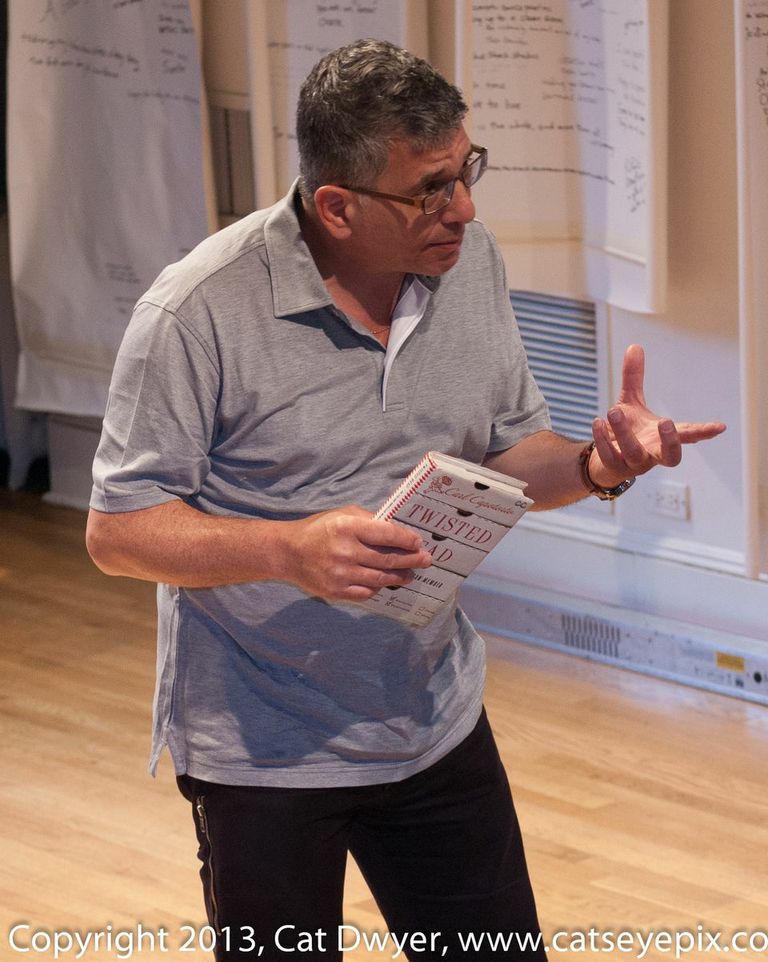
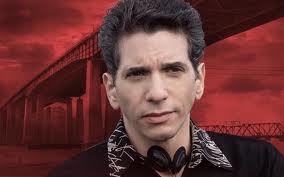
Carl Capotorto
Carl Capotorto, born and raised in the Bronx, is a playwright, screenwriter and actor, well known for his six seasons in the role of “Little Paulie” Germani in the Sopranos. Carl will be performing a work from his book, Twisted Head, a darkly comic memoir of growing up in the Bronx in the 60s and 70s.
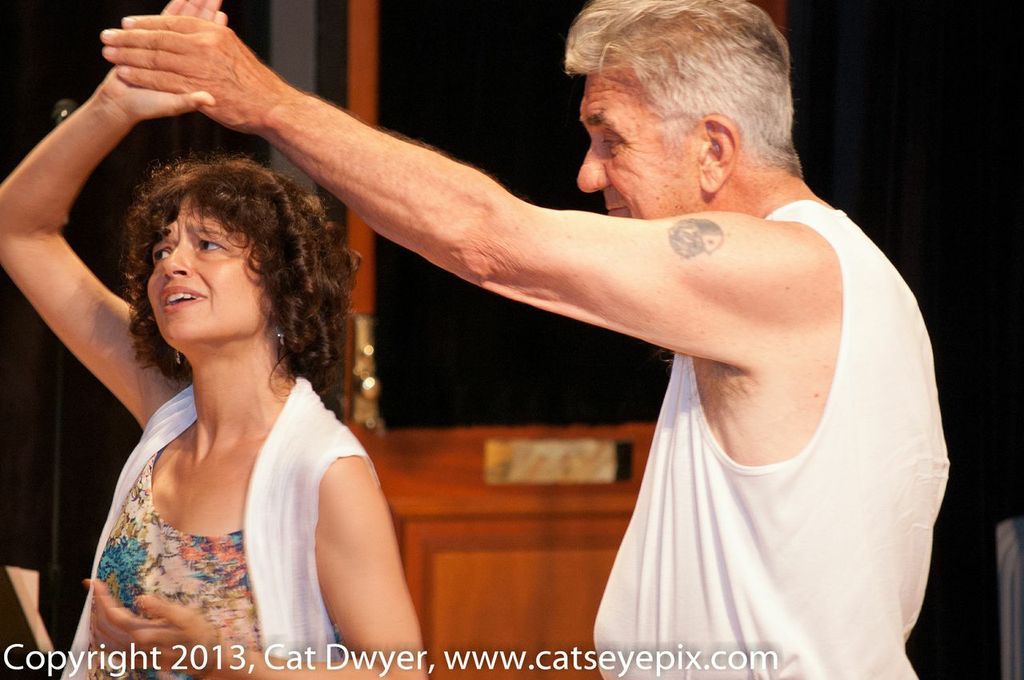
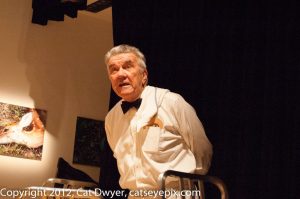
Jack O’Connell, Michele Cetera and Ray Lindie, Showcases regulars, will be performing a scene from Frankie and Johnny in the Claire de Lune by Terrence McNally. This two character play focuses on two lonely middle aged people who work in a Diner, he as a cook, she as a waitress. Johnny is certain that he’s found his soulmate in Frankie. She, on the other hand is far more cautious and disinclined to jump to conclusions.
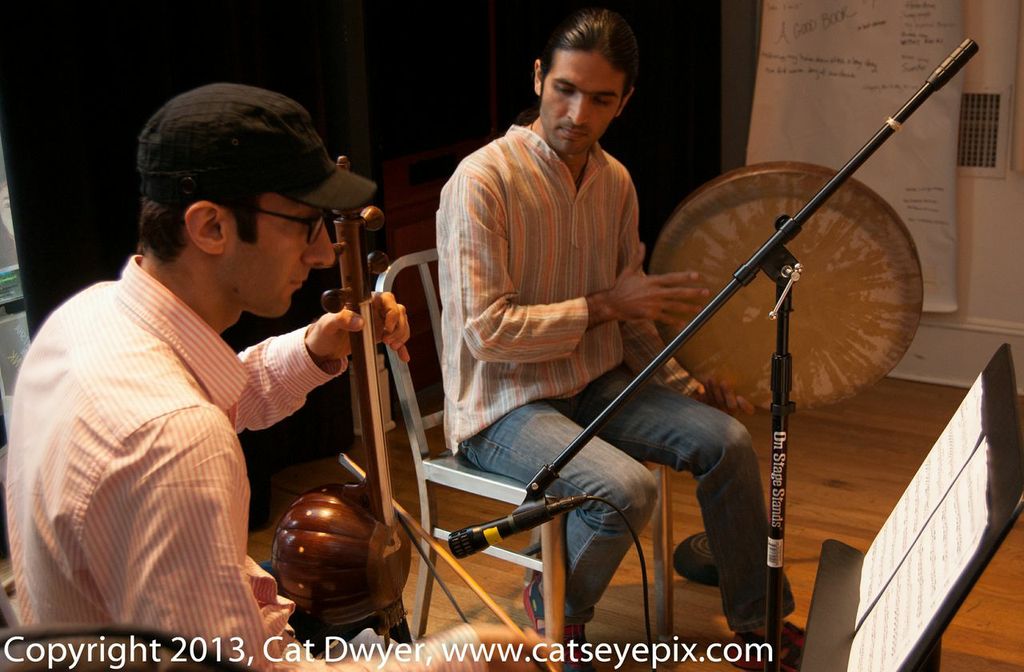
Navid Kandelousi
Classical musicians Navid Kandelousi and Ava Nazar not only perform classical music but Persian traditional music as well. Navid, a violinist will be playing the Kamancheh, a traditional Persian instrument, and Ava will be playing the piano during their performance of Persian music.
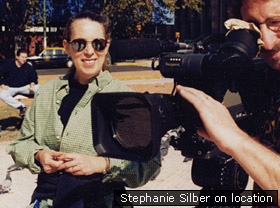
Award-winning documentary filmmaker Stephanie Silber will be reading from her short story The Lemon Tree, which follows a little girl through an eventful day with her grandmother in a 1960’s cityscape both alluring and menacing. This excerpt finds the duo visiting the grandmother’s stricken friend in a New York hospital for rehabilitation.
Stephanie Silber
Artists Without Walls was created to provide artists of all disciplines an opportunity to experiment with new ideas in front of a live audience; create an environment that fosters collaborative and creative effort and promote members’ careers in the arts, whether they have already established themselves or are at the beginning of their artistic career. We’re looking forward to a great night. Hope you can join us.
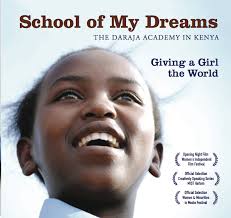
Barbara Rick’s award winning films “Girls of Daraja” and “School of My Dreams” air tomorrow, Monday, June 24th at 8:00pm ET on DIRECTV Channel 375 and DISH Network Ch. 9410, and anytime on this link when you click on the shows — http://www.linktv.org/documentaries
Artists Without Walls “Showcase at The Cell Theater,” Tuesday 7pm, 338 W23rd St. Free event
Marni Rice’s composition for solo accordion is featured in a short film called “Subterranean Love” by Robert Haufrecht, Friday, June 28th, 3:45pm at The Philadelphia Independent Film Festival. Here is a short video trailer link: Click here for a short video trailer
Honor Finnegan performing at the Soulful Sundown Coffeehouse Series, The Unitarian Universalists Church at Shelter Rock. 48 Shelter Rock Road Manhasset, NY, Friday, 7:30pm. Free event
Colin Broderick, author of “That’s That,” reading at An Beal Bocht Cafe, 445 W 238th St, Bronx, NY 10463, Friday, 8pm. Phone:(718) 884-7127. Free event
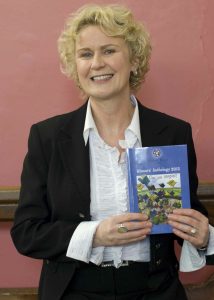
I was born in County Offaly, Ireland and lived there with my parents until I was five years old, at which time I was admitted to an industrial school in County Westmeath. Apart from 10 months back at home with my parents when I was eight years old, I remained in the orphanage until I was 17.
All of my 14 siblings spent their childhoods in Irish orphanages.
Many of my poems were inspired by my experiences growing up in care.
When I was 20 years old, I emigrated to the United States and settled in New York.
I worked as a waitress for many years (Tommy Makem’s Irish Pavilion and the
Pig & Whistle, among other Irish bar-restaurants) before enrolling in college in my
early-30s. A bachelor’s and master’s degree later, I secured an adjunct position teaching creative writing at Hofstra University, where I’ve been for the past eight years.
Connie Roberts and Paddy Moloney
What honors have you received for your poetry?
Winner of the Listowel Writers’ Week Poetry Collection Award, 2013
Winner of the Patrick Kavanagh Poetry Award, 2010
Winner of the Dromineer Literary Festival Poetry Competition, 2010
Awarded a space in the Poetry Ireland Introductions Series
Awarded an Irish Arts Council Literature Bursary Award
Nominated for the Hennessy X.O. Literary Awards
Finalist in the Strokestown International Poetry Competition
Finalist in the Dana Awards
Awarded a space at the Bread Loaf Writers’ Conference, Vermont
Recipient of the George M. Estabrook Award at Hofstra University
Why have you chosen poetry over other forms of writing such as short stories, memoir or novels?
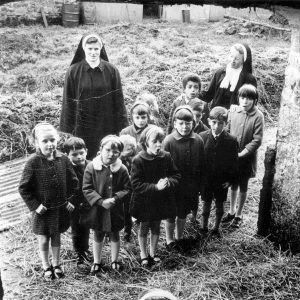
Christmas at the Orphanage, 1970. Connie Roberts, far left.
To be honest, I don’t think I had much control over what genre I “chose” to work in. In the mid-90s, when I was an undergraduate in a creative writing class at Nassau Community College, poetry grabbed me by the lapels, and refused to let go. As Professor Gubernat recited Molly Peacock’s poem “Say You Love Me”, about a drunken father pinning his child to a chair, my heart quickened, my throat tightened; I was in. Where do I sign up? I said. Besides the subject matter, which reflected my own background, I found the density of language, the imagery
(the drunken father’s face described as “a ham on a hook”), the rhythm, the sound devices exhilarating.
Now that I’ve been writing poetry for a number of years, I see another possible reason why the genre is a good fit for me. Most of the fodder for my work
(read: Irish-Catholic misery) was foisted upon me—believe me, I’d rather be writing about the heather on the bog or the windswept hills of Donegal—and it is easier swallowed, by writer and reader alike, in bite-sized pieces. The eight-line triolet or 14-line sonnet versus the 300-page memoir.
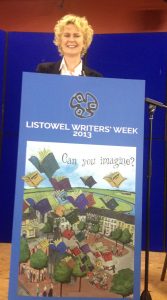
Connie Roberts at the “Listowel Writers’ Week”
Who are the poets/writers you admire?
Irish writers I admire include Seamus Heaney, Patrick Kavanagh, and John McGahern. I love the sense of place in their work. To say the least, my background is fragmented, so I find myself drawn to their sense of rootedness. Heaney’s Derry, Kavanagh’s Monaghan, McGahern’s Leitrim—they seem to know every blade of grass, every highway and byway, every neighbor and straggler on the road. I envy them their stability, their sure-footedness.
Other contemporary Irish poets I admire include Paula Meehan, Eavan Boland, Eilean Ni Chuilleanain, Moya Cannon and Rita Ann Higgins. Ireland is teeming with talented women poets…
I’m also drawn to African-American women poets: Marilyn Nelson, Gwendolyn Brooks, Natasha Trethewey, Lucille Clifton, Toi Derricotte, among others. I love how they explore and excavate their past, the beautiful and the ugly. I admire their bravery in taking on important—and oftentimes, provocative—issues. But besides all that, they are just brilliant poets—verbal acrobats who use language in an exciting and interesting way.
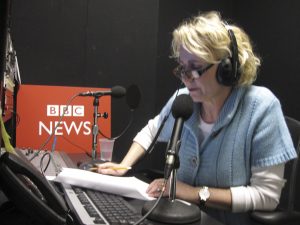
Connie Roberts on BBC News
Who is your greatest inspiration and why?
I don’t think a day goes by that I’m not inspired by someone. Two examples from the past week or so:
The retired (and retiring) truck driver I met in Scribes coffee shop in Listowel who sheepishly pulled a sheaf of poems he’d penned over the years out of his breast pocket to show me. It was open-mic night; thirty years earlier he might have stepped up to the podium. That night, he recited them to me.
Two days ago, my son and I were working on his “Me-Book” project. In the “My Future” section he wrote, When I grow up, I want a happy family and a happy home like I have now. Like most of us, sometimes, I wish I had a bigger paycheck, a nicer house, or a slimmer waist. But when I’m sitting in that ould rocking chair in the nursing home, the accomplishment I’ll be most proud of is that I brought my son up in a secure, happy, loving home.
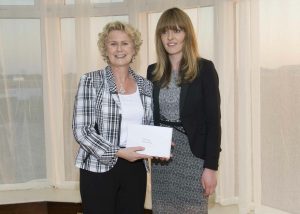
Connie Roberts receiving the Listowel Writers’ Award
What are the top five things you’d like to accomplish in the next five years?
Publish my first poetry collection in Ireland (which will actually happen next year)
Record a poet & piper CD with the premier uilleann piper Jerry O’Sullivan (which is on the cards for this summer)
Drawing on my own poetry, collaborate with other artists on a multi-media project
Secure a full-time teaching/administrative position at a U.S. college
Create an (audio/video) oral history of Irish industrial school survivors.
A massive undertaking I know (hint, hint: any sponsors in the crowd?), but their individual stories need to be documented. In their own words, not by scholars and intellectuals. Yes, there’s the Ryan Report. Yes, there are a handful of film documentaries. But the majority of survivors are still voiceless. And with each passing day, the chance of these elderly inmates (in Ireland, the UK and beyond) being heard grows slimmer.
What was the best gift that someone gave you that inspired or facilitated an interest in your art?
When I was in secondary school in Ireland, my English teacher, Mr. Costelloe, encouraged me to enter a Credit Union essay competition. I won at the local level and went on to the Leinster final, which I subsequently won. My first validation—I’d dipped my bucket in the writing well. But Mr. Costelloe’s gift to me wasn’t merely his encouragement. He also gave of himself. No parental figure from the orphanage accompanied me to the awards ceremonies. But he did. It was Mr. Costelloe who stood behind me for the newspaper photograph; it was Mr. Costelloe who took my friend and I for a celebratory bag of Tayto crisps and bottle of red lemonade in the local pub. It was Mr. Costelloe who took time out of his busy schedule as a teacher and father to reach out, to care.
Another gift I was given is a bit more tangible, and one that I’ll treasure for a lifetime: a handwritten note from Seamus Heaney. A few years after he won the Nobel Prize in Literature, on a visit to NYC, he happened to walk into the Irish bar-restaurant where I waitressed. Unfortunately, I was off duty that evening, but my friend, knowing how much I admired the Great Poet, asked him if he would write me a note (I had just won a prize for poetry at Hofstra U.). He obliged.
Connie,
It is a far, far better thing you do now than you have ever done. Stick with it…Congratulations. Keep digging for the good turf…
When you’re a Nobel Laureate, everybody wants a piece of you. Doubtless in the years after Seamus Heaney’s trot over to Sweden, he must’ve been pulled in a 100 different directions. I’m sure on that visit to New York in 1998, SH would’ve liked nothing better than to slip anonymously into a nondescript bar downtown and enjoy a pint in peace. Instead, he took the time to write a note of encouragement (on an American Express reservation card) to an insecure, fledgling poet.
Great note. Great poet. Great man.
What is your favorite quote?
Since I turned 50 last December, Samuel Beckett’s Krapp’s Last Tape has been spooling in my ears:
Perhaps my best years are gone….But I wouldn’t want them back. Not with the fire in me now. No, I wouldn’t want them back.
Aedin Moloney reading “Molly” from Joyce’s Ulysses, today, “Bloomsday Sunday” at the Ulysses Folk House, 2pm. 95 Pearl Street, NYC.
George Heslin presents Stop The Tempo today, Sunday, at 4pm and 7pm, Tuesday at 7pm. Arlene’s Grocery 95 Stanton Street, NYC. For tickets click here. Use the AWoW code AWW18 for a $7 discount.
Ethiopian Street Children’s Benefit. Join Artists Without Walls and the HOpe Charity for an evening of cocktails, entertainment and philanthropy. Entertainment by Niamh Hyland, Honor Finnegan and Koro Koroye. Events begin at 6pm at Fitzpatrick’s Grand Central Hotel, 141 E. 44th St., NYC. Click here for ticket information
Tara O’Grady performing at Swing 46 Jazz and Supper Club, Wed. 8:30pm. 349 W. 46th St. For reservations click here
“A muggy summer evening on Ludlow Street, a packed house, and a serving of artistic delights–what you get when you mix AWoW with the Lower East Side.” said Jim Rodgers, as the crowd from the Living Room spilled onto the street.
Billy Barrett
Sarah Fearon kicked off the successful evening of performers with a funny set of stand up. She offered her theories, with a twist, on the subjects of the economy, yoga, being a people person, optimism, hoarders, why she can’t read the newspaper, and why she will be shopping for a “smart clone.”
As the crowd filled to standing room only, the cocky slink of Curtis Mayfield’s Superfly rumbled through the crowd. It was Billy Barrett time. Highway Star’s his anthem and he loves to sing it. Last night he tracked the bloated stretch of an LA Superfly. “Coulda killed him, didn’t…” so now in the May swelter of a New York City nightclub, we can all have a good laugh about it.
Tara O’Grady, Niamh Hyland, Tami Lynn, Sasha Papernik and Jack O’Connell
Singers/songwriters Tara O’Grady and Sasha Papernik collaborated on vocals and piano. These songbirds have modernized the music of their cultures and given them new life. Sasha joined Tara in beautiful harmony on a soulful version of “The Water is Wide,” from Tara’s first album Black Irish. Pianist Sasha, whose parents were born in Moscow, Russia, then treated the audience to a song from the famous Russian cartoon, “Cheburashka.” You can hear Sasha live with her ensemble at Cornelia Street Cafe on July 8th at 8:30pm and Tara with her full band at Swing 46 Jazz & Supper Club on June 19.
Koro Koroye
Three unscheduled guests added spice to the event: Karyn Oliver–part Joan Osborne, a touch of Janis Joplin and a bit of EmmyLou Harris – effortlessly oscillated from bluesy to country with two songs, “Candy Dish” and “Right Now.” Her musical inspiration comes primarily from the eclectic mix of music to which she was exposed while growing up in the musically diverse culture of Washington. Tami Lynn, who scored a big hit in the seventies with the song “I’m Gonna Run Away From You,” sang a soulful, “Smile,” while AWoW favorite and spoken word artist Koro Koroye performed two of her poems, “Michele” and “What’s In A Name.”
Awow co-founder and Irish born singer/songwriter Niamh Hyland, beat-boxer Anand Gan and guitarist Art Lamonica followed. Demonstrating her versatility and wide range, Niamh sang the blues, stylizing two tunes with smoky overtones and emotional punch. The songs “When the Moon Hangs Low” and “Ray Anne” were co-written by Niamh, Anand and Arthur.
Silbin Sandovar
Singer/songwriter Silbin Sandovar performed “Loving In The Worst Way” and “Beggars” The first tune is newly written and has not been recorded yet. The second is on my album “Brian & Silbin and Friends” “Good times, very cool event,” said Silbin and the end of the evening.
Jim Rodgers read from his novel Long Night’s End, where Johnny Gunn is back playing with his band on the Bowery, drinking heavily and trying miserably to forget the recent tragedies visited upon the good people of Sunnyside, Queens. It appears, however, that Johnny’s own self-destructive behavior is the real threat to his survival and that of his family. Another slice of the dark side from the urbane Mr. Rodgers.
Liam O’Connell and Henry O’Connell
The O’Connells, no strangers to AWoW Showcases, closed out the show. Henry hammered out some piano loops while his brother Liam beat-boxed and rapped “If Your Mother Only Knew.” Film and television actor Jack, O’Connell—Henry and Liam’s father—got into the act, performing a monologue from the Lyle Kessler play “Orphans” which just completed a shortrun on Broadway, while Henry knocked out Paul Desmond’s “Take Five” on the piano. Jack’s character, Harold, tries to explain the dangers of going too far for financial gain. It’s a story about his orphaned protege who dies from pneumonia after selling his last two newspapers that he wore for insulation during the winter. Later in the evening Jack said, “As a father I thought the use of this metaphor could also be applied to the music industry and the “Rap” world that my sons have flirted with.
Charles R. Hale and Tara O’Grady
With that, the evening, which Liam O’Connell called, “high energy, high attitude,” came to a close. Future AWoW events include “The Ethiopian Street Children’s Benefit” a collaboration with the HOpe Charity at the Fitzpatrick Grand Central Hotel on June 19, 6pm–Niamh, Koro and Honor Finnegan will be performing–and an AWoW Showcase on June 25th, 7pm at The Cell Theatre.
Violinist Annette Homann will be appearing in “What I’m Failing to Learn,” Wed., June 5, 7pm and Saturday, June 8, 3pm, at the 13th Street Repertory Theatre, 50 W. 13th St., NYC. Tickets $25. Ticket Information
Antoinette Montague with David Chamberlain’s Band of Bones, Wed., June 5,, first of three shows 9pm at the Zinc Bar, 82 W. 3rd St., NYC. www.zincbar.com Tickets $15
Join AWoW member and Contributing Country Living Editor Ed McCann and over 200 vendors for a three day fair beginning Friday June 7, 10am, through Sunday 5pm. All under cover at the Dutchess County Fairgrounds, Route 9, Rhinebeck, NY. Located in New York’s beautiful Hudson Valley, Rhinebeck is just 1.5 to 2 hours from New York City, Hartford,CT, Westchester County, NY, northern New Jersey and only 3 hours from Boston or Philadelphia
A number of those in attendance at last night’s “AWoW Rocks the Living Room” event asked me to reprint Martha Pinson’s beautiful and evocative story of her grandmother. The story is put to the music of “Ashokan Farewell,” another beautiful and evocative work, which was written by Jay Ungar for the Ken Burns Civil War documentary film. You can listen to Ashokan while you read by going to the bottom of the page and clicking on the youtube link.
RHYMES WITH TIME
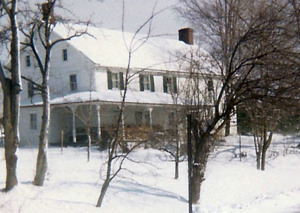
Someone who loved order must have spared the twin maples twenty paces in front of the old, clapboard farmhouse. They lent a symmetry otherwise lacking and graciously shaded the lawn. The bank dropped sharply to a dirt road and a swampy pasture where weeping willows concealed the Dead River but not the fields rising beyond. All this, common birds and butterflies, a rusty cultivator, and whatever else was carelessly left, formed my Grandma’s view from the long, weathered porch where she worked on summer days. “How can a river be dead?” I wondered.
It was all tangles of green and, like they say in wordy books, “dazzling sunny patches interwoven with deep shades.” The atmosphere was languid, though alive with peepers. High winds and high tensions passed over the tops of surrounding hills.
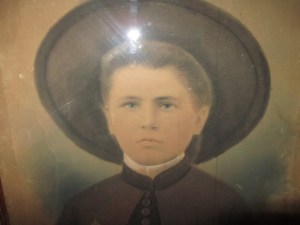
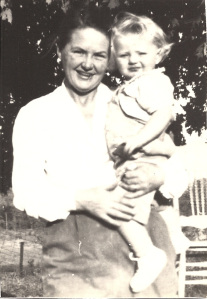
She sat rather still, did Ellen Marie Kilaren Deeny. (Right, age 16) Tired, I guess, with 77 years behind her by 1951. A hungry child in Dublin, at thirteen she’d crossed the Atlantic where she said, “many brave hearts are asleep in the deep.” Here in New Jersey, she became a dairy farmer’s wife. I later learned of 13 pregnancies in 20 years, two miscarriages, three dead in their first year, seven raised, one dead at 37 from a heart infection. Now, her oldest daughter, also Ellen Marie, my mother, (Below with author) who moved back home after college to help her parents, was ill and (no one dared to think) dying from the same disease.
Grandpa was dead. The only person he could stand was my father, and vice versa. Daddy was good with him, gave him a shave every morning. His father had died some 20 years prior and I guess he thought a crazy old man was better than none. Old Hughie wasn’t suited to his fate. A skilled cabinetmaker, he remembered dancers and teachers among the Deeny’s in Donegal. He was a pretty good farmer anyway, but not good enough against the Farm Depression of the late 20’s and 30’s. Nevertheless, he sent his brilliant children to college, Radcliffe and such.
But somehow, Grandma Deeny accepted all things in life. She loved her children, did what she could, and left the rest to Providence. Daddy said she was the only good Catholic he knew (he loved to exaggerate) and drove her to Mass every Sunday. I watched her, comfortably stooped in a straight chair, wearing an old cotton dress, shelling peas. The soft wind just lifted her wisps of hair. She split the pods, gave me that melancholy smile, and said nothing. I said nothing, too. A child respects a reverie sometimes, I’ve discovered.
Swiped peas are the sweetest, warm as the day as they rolled off her thumb and dropped in the kettle ather feet. I don’t think she minded, though they were to be cooked for supper and many people were entitled. They were mine after all. My mother and father had planted and picked them and so on, and on and on spun my simple universe.
What was she thinking? Did I remind her of herself as a girl of three and make her long for her most green home? Did she wonder where the hungry tow-headed elf with her eyes would find her strength in adversity? Was she recalling her life in the light of the Immortality of the Soul and the Forgiveness of Sins? I don’t know. She was lost to me in the secret ecstasy of woman’s work so rhythmic and expert the mind is free to exult or pine, the eye to be caught by a butterfly. And she stays with me that way.
Still I strain to hear her voice, to find her words. “I’m sorry, Miss, it’s impossible. No records were kept.”
“But I want to know and there’s nowhere else to look.”
“Well, that’s not very good, is it?” says the complacent bureaucrat with finality. Furious, I walk away, but soon silently singing of Ellen Marie.
–Martha Pinson, summer 1982, edited 2011
New York City
Click here for more about the very talented Martha Pinson.