"SPOTLIGHT ON" POET CONNIE ROBERTS


Connie Roberts
Connie Roberts

Who is Connie Roberts? 


I am a mother, poet, teacher…….and late-bloomer.


I was born in County Offaly, Ireland and lived there with my parents until I was five years old, at which time I was admitted to an industrial school in County Westmeath.    Apart from 10 months back at home with my parents when I was eight years old, I remained in the orphanage until I was 17.


All of my 14 siblings spent their childhoods in Irish orphanages.


Many of my poems were inspired by my experiences growing up in care.


When I was 20 years old, I emigrated to the United States and settled in New York. 

I worked as a waitress for many years (Tommy Makem’s Irish Pavilion and the

Pig & Whistle, among other Irish bar-restaurants) before enrolling in college in my

early-30s.  A bachelor’s and master’s degree later, I secured an adjunct position teaching creative writing at Hofstra University, where I’ve been for the past eight years.


Connie Roberts and Paddy Moloney

What honors have you received for your poetry?


  • Winner of the Listowel Writers’ Week Poetry Collection Award, 2013
  • Winner of the Patrick Kavanagh Poetry Award, 2010
  • Winner of the Dromineer Literary Festival Poetry Competition, 2010
  • Awarded a space in the Poetry Ireland Introductions Series
  • Awarded an Irish Arts Council Literature Bursary Award
  • Nominated for the Hennessy X.O. Literary Awards 
  • Finalist in the Strokestown International Poetry Competition
  • Finalist in the Dana Awards
  • Awarded a space at the Bread Loaf Writers’ Conference, Vermont
  • Recipient of the George M. Estabrook Award at Hofstra University


Why have you chosen poetry over other forms of writing such as short stories, memoir or novels?
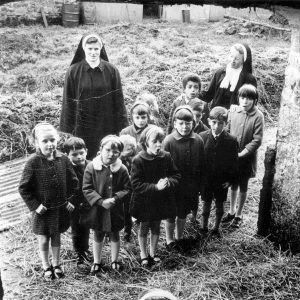
 

Christmas at the Orphanage, 1970. Connie Roberts, far left.

To be honest, I don’t think I had much control over what genre I “chose” to work in.  In the mid-90s, when I was an undergraduate in a creative writing class at Nassau Community College, poetry grabbed me by the lapels, and refused to let go.  As Professor Gubernat recited Molly Peacock’s poem “Say You Love Me”, about a drunken father pinning his child to a chair, my heart quickened, my throat tightened; I was in.  Where do I sign up? I said.  Besides the subject matter, which reflected my own background, I found the density of language, the imagery

(the drunken father’s face described as “a ham on a hook”), the rhythm, the sound devices exhilarating.  


Now that I’ve been writing poetry for a number of years, I see another possible reason why the genre is a good fit for me.  Most of the fodder for my work

(read: Irish-Catholic misery) was foisted upon me—believe me, I’d rather be writing about the heather on the bog or the windswept hills of Donegal—and it is easier swallowed, by writer and reader alike, in bite-sized pieces.  The eight-line triolet or 14-line sonnet versus the 300-page memoir.
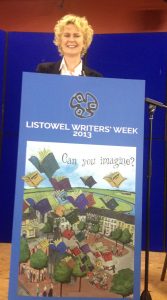


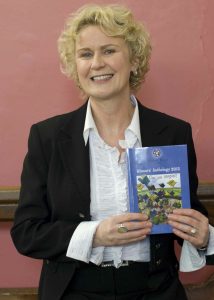
Connie Roberts at the "Listowel Writers' Week"
Connie Roberts at the “Listowel Writers’ Week”

Who are the poets/writers you admire?


Irish writers I admire include Seamus Heaney, Patrick Kavanagh, and John McGahern.  I love the sense of place in their work.  To say the least, my background is fragmented, so I find myself drawn to their sense of rootedness.  Heaney’s Derry, Kavanagh’s Monaghan, McGahern’s Leitrim—they seem to know every blade of grass, every highway and byway, every neighbor and straggler on the road.  I envy them their stability, their sure-footedness.


Other contemporary Irish poets I admire include Paula Meehan, Eavan Boland, Eilean Ni Chuilleanain, Moya Cannon and Rita Ann Higgins.  Ireland is teeming with talented women poets…


I’m also drawn to African-American women poets:  Marilyn Nelson, Gwendolyn Brooks, Natasha Trethewey, Lucille Clifton, Toi Derricotte, among others. I love how they explore and excavate their past, the beautiful and the ugly.  I admire their bravery in taking on important—and oftentimes, provocative—issues.  But besides all that, they are just brilliant poets—verbal acrobats who use language in an exciting and interesting way.
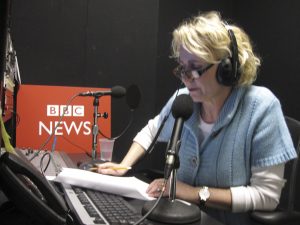


Connie Roberts on BBC News

Who is your greatest inspiration and why?


I don’t think a day goes by that I’m not inspired by someone.  Two examples from the past week or so:


  • The retired (and retiring) truck driver I met in Scribes coffee shop in Listowel who sheepishly pulled a sheaf of poems he’d penned over the years out of his breast pocket to show me.  It was open-mic night; thirty years earlier he might have stepped up to the podium.  That night, he recited them to me.
  • Two days ago, my son and I were working on his “Me-Book” project.  In the “My Future” section he wrote, When I grow up, I want a happy family and a happy home like I have now.  Like most of us, sometimes, I wish I had a bigger paycheck, a nicer house, or a slimmer waist.  But when I’m sitting in that ould rocking chair in the nursing home, the accomplishment I’ll be most proud of is that I brought my son up in a secure, happy, loving home.
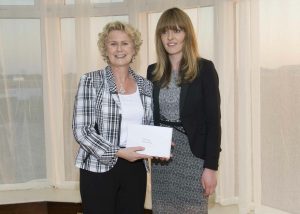
 

Connie Roberts receiving the Listowel Writers' Award
Connie Roberts receiving the Listowel Writers’ Award

What are the top five things you’d like to accomplish in the next five years?


  • Publish my first poetry collection in Ireland (which will actually happen next year)
  • Record a poet & piper CD with the premier uilleann piper Jerry O’Sullivan (which is on the cards for this summer)
  • Drawing on my own poetry, collaborate with other artists on a multi-media project
  • Secure a full-time teaching/administrative position at a U.S. college
  • Create an (audio/video) oral history of Irish industrial school survivors. 

A massive undertaking I know (hint, hint:  any sponsors in the crowd?), but their individual stories need to be documented.  In their own words, not by scholars and intellectuals.  Yes, there’s the Ryan Report.  Yes, there are a handful of film documentaries.  But the majority of survivors are still voiceless.  And with each passing day, the chance of these elderly inmates (in Ireland, the UK and beyond) being heard grows slimmer.


What was the best gift that someone gave you that inspired or facilitated an interest in your art?


When I was in secondary school in Ireland, my English teacher, Mr. Costelloe, encouraged me to enter a Credit Union essay competition.  I won at the local level and went on to the Leinster final, which I subsequently won.  My first validation—I’d dipped my bucket in the writing well.  But Mr. Costelloe’s gift to me wasn’t merely his encouragement.  He also gave of himself.  No parental figure from the orphanage accompanied me to the awards ceremonies.  But he did.  It was Mr. Costelloe who stood behind me for the newspaper photograph; it was Mr. Costelloe who took my friend and I for a celebratory bag of Tayto crisps and bottle of red lemonade in the local pub.  It was Mr. Costelloe who took time out of his busy schedule as a teacher and father to reach out, to care.


Another gift I was given is a bit more tangible, and one that I’ll treasure for a lifetime:  a handwritten note from Seamus Heaney.  A few years after he won the Nobel Prize in Literature, on a visit to NYC, he happened to walk into the Irish bar-restaurant where I waitressed.  Unfortunately, I was off duty that evening, but my friend, knowing how much I admired the Great Poet, asked him if he would write me a note (I had just won a prize for poetry at Hofstra U.).  He obliged.


Connie,


It is a far, far better thing you do now than you have ever done.  Stick with it…Congratulations.  Keep digging for the good turf…


When you’re a Nobel Laureate, everybody wants a piece of you.  Doubtless in the years after Seamus Heaney’s trot over to Sweden, he must’ve been pulled in a 100 different directions.  I’m sure on that visit to New York in 1998, SH would’ve liked nothing better than to slip anonymously into a nondescript bar downtown and enjoy a pint in peace.  Instead, he took the time to write a note of encouragement (on an American Express reservation card) to an insecure, fledgling poet.


Great note. Great poet. Great man.


What is your favorite quote?


Since I turned 50 last December, Samuel Beckett’s Krapp’s Last Tape has been spooling in my ears:


Perhaps my best years are gone….But I wouldn’t want them back. Not with the fire in me now. No, I wouldn’t want them back.

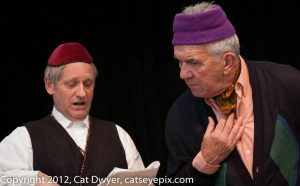


ARTISTS WITHOUT WALLS' SHOWCASE AT THE CELL, 2/26/13

The evening was kicked off by Kathleen Hill, whose beautifully written and highly acclaimed novel, Who Occupies This House, tells the story of one Irish-American family, read from a piece she’d recently completed, “My Apple Tree, My Brightness.” It’s an elegy for her father, a man haunted by his own grandfather, John Ryan, who left County Clare during the Famine to settle in New York City: a meditation on the complicated, sorrowful meaning of the Famine to Irish Americans and their attachment to Ireland. An evocative, thought provoking beginning to the evening. 


Mary McPartlan and Koro

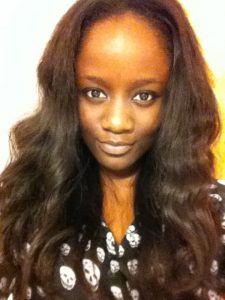
Spoken word artist, Koro, a grad student at Hofstra University, performed four short works, “Heritage,” “Grandmother,” “To the Woman in India Who Got Hurt by a Thousand Men” and “Michele.” It was a line from “Michele,” however, a poem about Michele Obama, that was on the tongue of many during the intermission: “The way you walk with the strength of three-hundred Greek warriors.” Of Koro, AWoW member Jim Rodgers said, “The genuine article and a pure mixture of high octane talent and literary genius. Koro is the heart and soul of Charles’s vision for Artists Without Walls. We witnessed beauty on Tuesday night.”


Mary McPartland, the celebrated Irish traditional singer and long  respected figure on the Irish folk scene, stilled the audience with three songs about “place.” She opened with “The High Walls of Derry,” about her mother’s homeland of County Tyrone to the place where she grew up in County Leitrim. She explained that her mother’s life and her home have given her the source of her music and song. The second song, “Sanctuary,” depicts the landscape of the local hills of Drumkeering, where she grew up, and the images of the men and boys coming home from the Arigna mines and the hardships she and others endured.  Mary ended with a song of hope and idealism called “Rainy Night in Soho,” written by Shane McGowan.  A wonderful performance from this fiercely talented woman. 


Niall McKay and Marissa Aroy of the Emmy award winning production company, Media Factory, presented a video trailer, Delano Manongs, a soon to be released film for PBS. Delano Manongs tells of the plight of Filipino farm workers, many of whom came to California in the 1930s, and the development of the United Farm Workers. Many, including this writer, had mistakenly believed that it was the Mexicans and Ceasar Chavez who were the impetus beyond the Farm Workers’ movement. Delano Manongs, beautifully written and co-produced by Niall and Marissa, who was recently named one of the most influential Filipina women in the United States, serves notice that the UFW was a collaboration between the Mexicans and the Filipinos. This highly anticipated documentary is certain to draw a huge audience. 

Jim Rodgers and Jack O'Connell
Jim Rodgers and Jack O’Connell


Screen and TV actor Jack O’Connell found his natural calling and became purple royalty for the night. Wonderful as ever, he played the King with a bone to pick with the mischievous Cardinal in an excerpt from Brendan Connellan’s dark comedy, “Pompa Pompa!” Jim Rodgers knocked the cover right off the ball in playing the Cardinal, his first role on the stage in, let’s be kind, twentyish years. Now that he’s worn the red hat, he might just have to wear in the courts and see if it sways the judges.


Stephanie Silber read a strong excerpt from her new short story, The Lemon Tree, which follows a little girl through an eventful day with her grandmother in a 1960’s era New York cityscape both alluring and menacing.  She promised to read more from it at future Showcases if the crowd liked it; from the response, it was clear that they did.


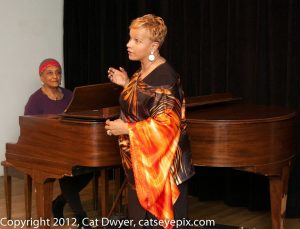
Bertha Hope and Antoinette Montague

Duke Ellington’s granddaughter, Mercedes Ellington said that her grandfather said of Ella Fitzgerald that “She was ‘BEYOND CATEGORY.” Mercedes added, “And I would like to say the same of  Antoinette Montague that she is ‘beyond category’.” Antoinette, accompanied by pianist Bertha Hope, an active force in improvised music from the 1960’s, sang three tunes:  “Let The Good Times Roll,” Nina Simone’s “Four Women,” Abby Lincoln’s “Caged Bird” and she walked off singing “The Saints Go Marching In.”  Smooth and soulful, range, phrasing and taste, Antoinette and Bertha had the audience calling for more.


The multi-talented Seamus Scanlon – a blend of Tarrantino and Joyce some say – finished the night with a new story ‘Perfect Sin’ which continues the theme of his collection As Close As You’ll Ever Be. A great ending to a fascinating evening.  


The next Artists Without Walls’ Showcase will be at The Cell on March 26. To join Artists Without Walls click on “Membership” above. For more information on Artists Without Walls write to info@artistswithoutwalls.com


"SPOTLIGHT ON" KORO


photo45Who are you?  

My name is Koro Koroye and I am a Spoken Word artist from Lagos, Nigeria. I am currently pursuing my MFA in Creative Writing with a focus on poetry at Hofstra University. Spoken word has always been and will continue to be a passion. I enjoy expressing myself in front of a microphone. My goal is to inspire my audience every time I perform.


What are you working on at the moment? 

Besides working on my Masters, I am working with an NGO (Non government organization) in Nigeria that serves orphaned children living in the slums. I also work with the Huntington Arts Council on an art exchange program that inspires creativity in these children. I am working on a collection of poetry that I hope to have published soon.


photo(46)Do you have upcoming events you would like people to attend?

I will be performing at the “Artists Without Walls Showcase” on February 26th at The Cell Theatre, 338 W. 23rd St in NYC. The show starts at 7pm and ends at 9:30pm.


What are five things you can’t live without?

  • An Ipod,
  • A pen,
  • Red lipstick
  • A bottle of water
  • Lip balm!


Your favorite quote at the moment and why? 

“The better a man gets, the more he is envied and in turn, hated” – Charles Bukowski. This quote gets me through life.


Who have you always wanted to work with and why? 

I have always wanted to work with Joshua Bennett. He is an amazing spoken word artist and he inspires me so much. Look him up on YouTube when you have a chance.


If you had the opportunity to ask someone when you were starting out for advice, who would you have asked and what would you have asked?  

I’d ask other poets that started out doing “Spoken Word” when it was a form of art that was not properly understood or appreciated. Poets such as Felipe Luciano and Mos Def come to mind. They paved the way for “Spoken Word” poetry in my opinion.


If you could dream about trying out something you haven’t tried out in the arts yet, what would that be? 

No doubt: performing a poem with a singer. I have never tried that and I’d like that to happen as soon as possible.


What was the best gift that someone gave you that inspired or facilitated an interest in your art? 

When my professor, Connie Roberts, introduced me to The Nuyorican Poets Café in New York. It’s the best.


http://www.youtube.com/user/koromone

http://www.youtube.com/watch?v=bgrPwHuR_bE&list=UUBU5AspFNcSkVNA_nmk5D3A&index=9

http://www.youtube.com/watch?v=SzFvYjBO6zk

https://www.facebook.com/koro.koroye


Facebook: www.facebook.com/Artistswithoutwalls

Twitter: www.twitter.com/artistswowalls

Website: www.artistswithoutwalls.com                                                                                               

© Artists Without Walls, LLC